Hi all, last Friday Microsoft released Windows 11 Build 29695.1001 Experimental (Future Platforms) Preview
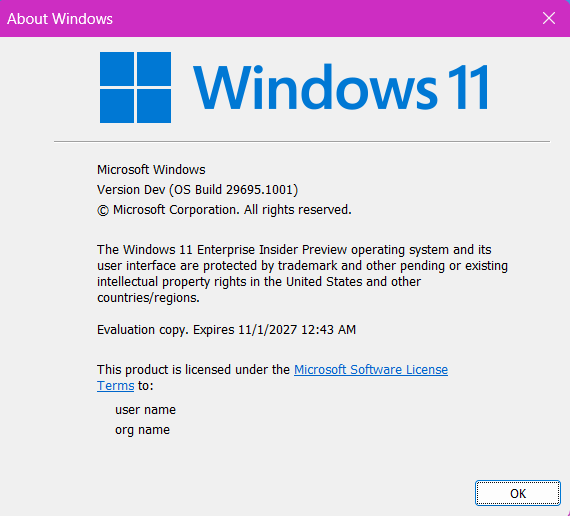
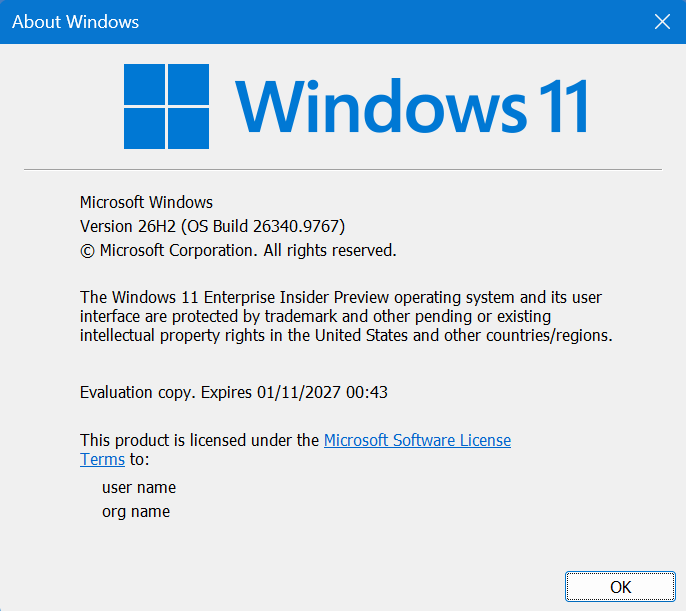
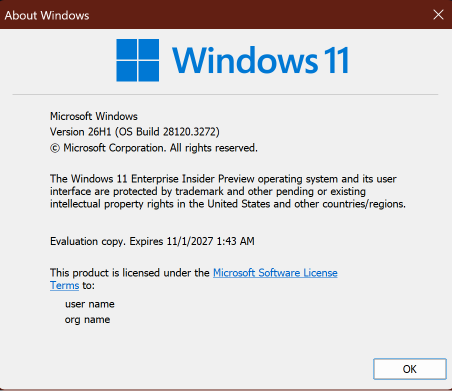
screenshot showing Winver of build 29695.1001
Smooth flighting on my devices on this build, click-todo is still missing on the snapdragon devices on thsi build
Happy Flighting!
Changes and improvements gradually being rolled out*
This update includes a small set of general improvements and fixes that improve the overall experience for Insiders running this build on their PCs.
[Magnifier]
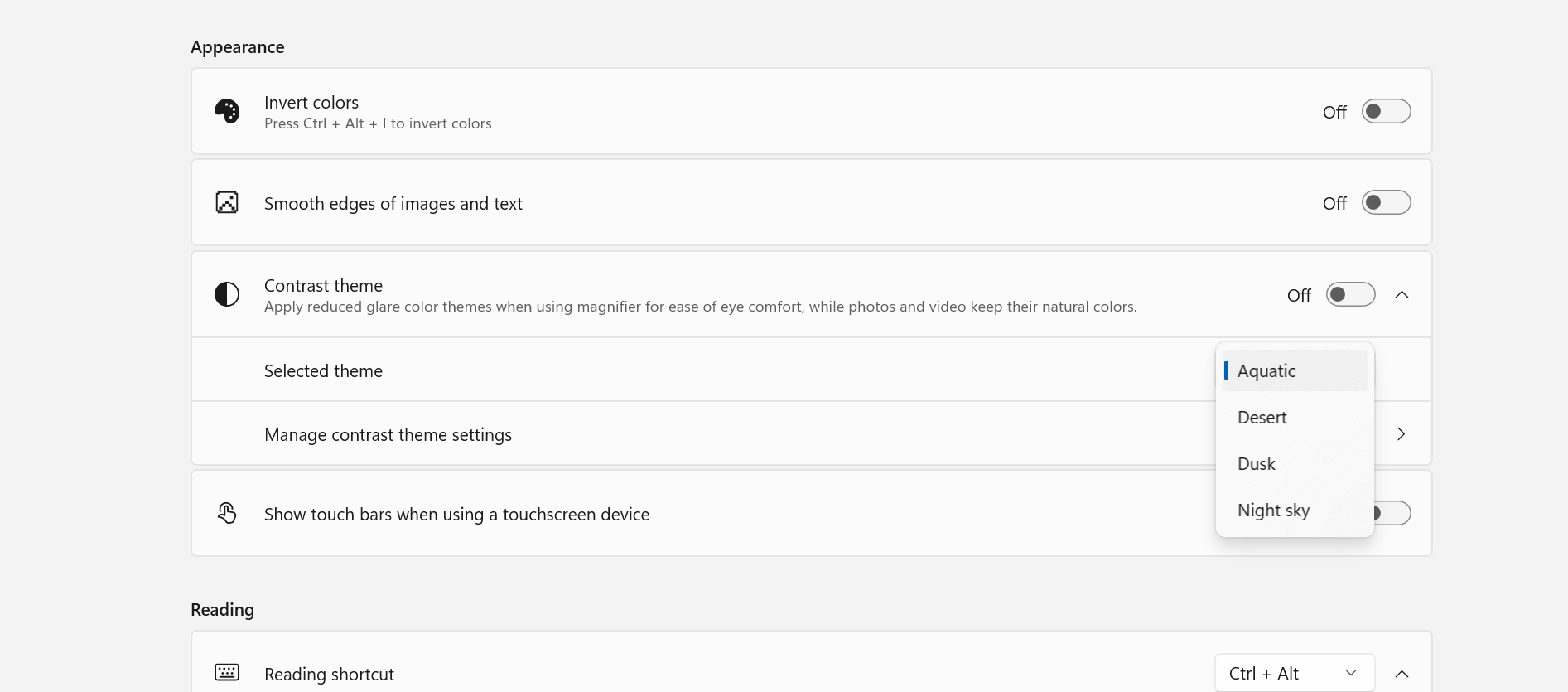
A new contrast theme toggle for a lower-glare screen. If bright screens are uncomfortable, many people use color inversion to reduce glare. However, inversion changes everything on screen, including photos, charts, and videos. With this update, we’re introducing a new contrast theme toggle in Magnifier.
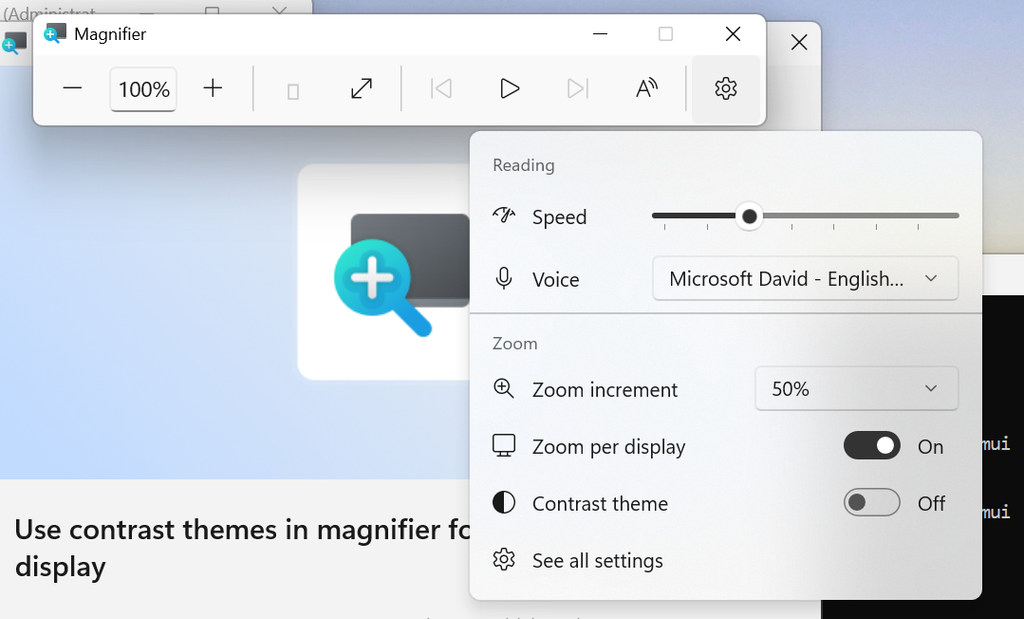
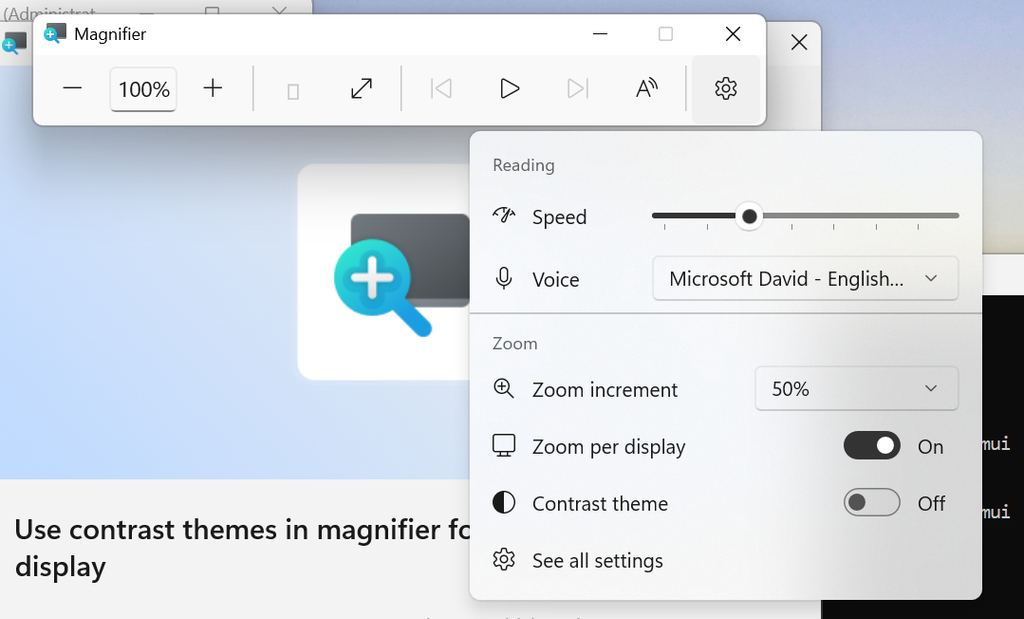
Reduce glare with a single toggle. Turn on a contrast theme directly from the Magnifier toolbar for a more comfortable viewing experience.
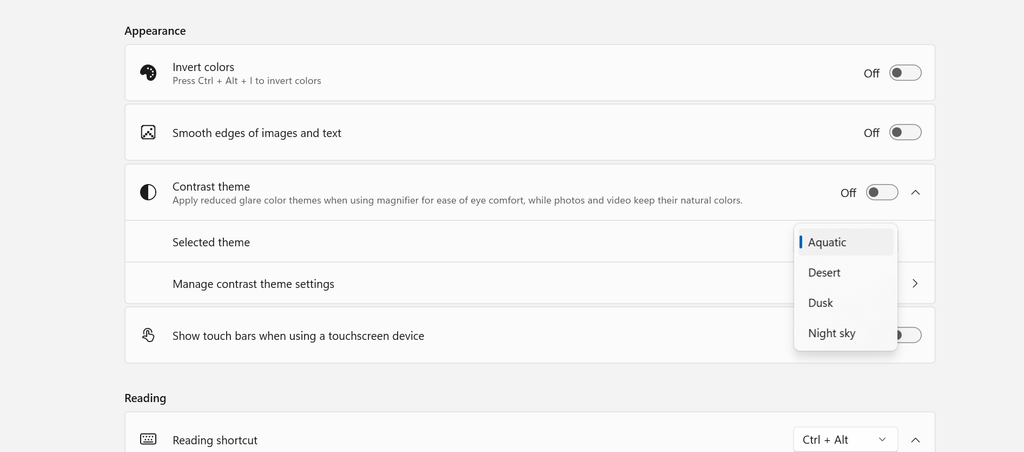
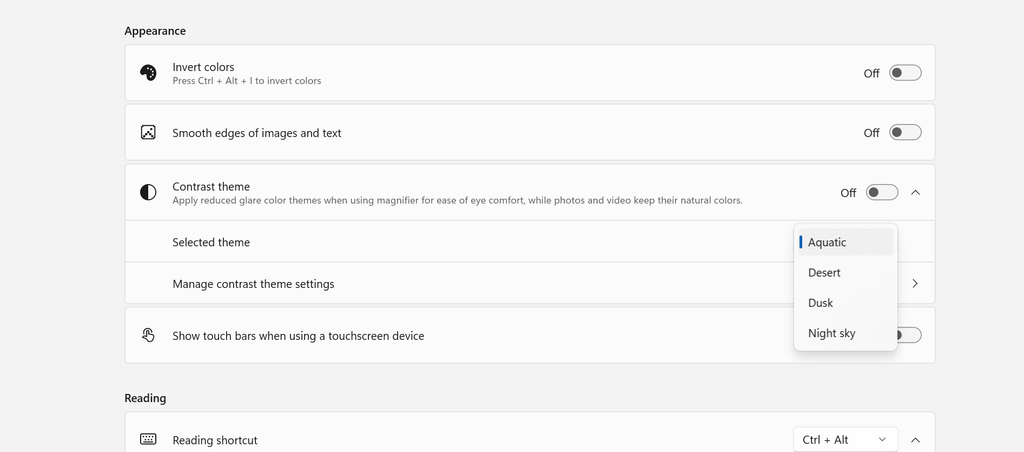
Choose the contrast theme that works best for you. The dark theme is applied by default, and you can choose which contrast theme the toggle uses under Settings > Accessibility > Magnifier.
Photos, videos, and charts keep their original colors. Unlike color inversion, the contrast theme recolors the interface without touching your photos, charts, or videos, so they keep their real colors.
Color inversion is still here. This isn’t a replacement. If you use inversion today, it works exactly as it always has. The contrast theme is a separate, purpose-built option to reduce glare when you want a darker interface without inverting colors.
UI showing the new contrast theme toggle in Magnifier. Zoom per display isn’t yet available in the Beta channel.
UI showing contrast theme settings for Magnifier.
[Family Safety]
Improved family safety messaging when applications are blocked because of age-restricted parental controls.
[Windows setup]
The digital safety of users and supporting families is central to how we think about the Windows experience. We’re improving information on parental controls and their availability during Windows setup, so families can more easily understand available protections and make informed choices from the very beginning.
[Network]
Fixed an issue causing internet access to stop working for some Insiders after the last two flights.
[Hyper-V]
Fixed an issue where some applications that used HCS-managed virtual machines experienced issues when sharing host folders with Linux VMs using Plan9. Folders shared from the Windows host using Plan9 didn’t appear or couldn’t be accessed in the guest environment.
[Other]
Fixed an issue causing some Insiders to see an unexpectedly high volume of ESENT events after the latest flights.
Fixed an underlying issue in the latest flights causing Insiders using VMware to experience frequent green screen bugchecks with error PFN_SHARE_COUNT.
[Known Issues]
We are aware that Recall may be missing or unable to launch on some Copilot+ PCs if performing a clean install on this build. We are working to resolve soon and will provide an update.
Hi all, last Friday Microsoft released Windows 11 Build 28120.3302 to the Experimental (26H1) Channel
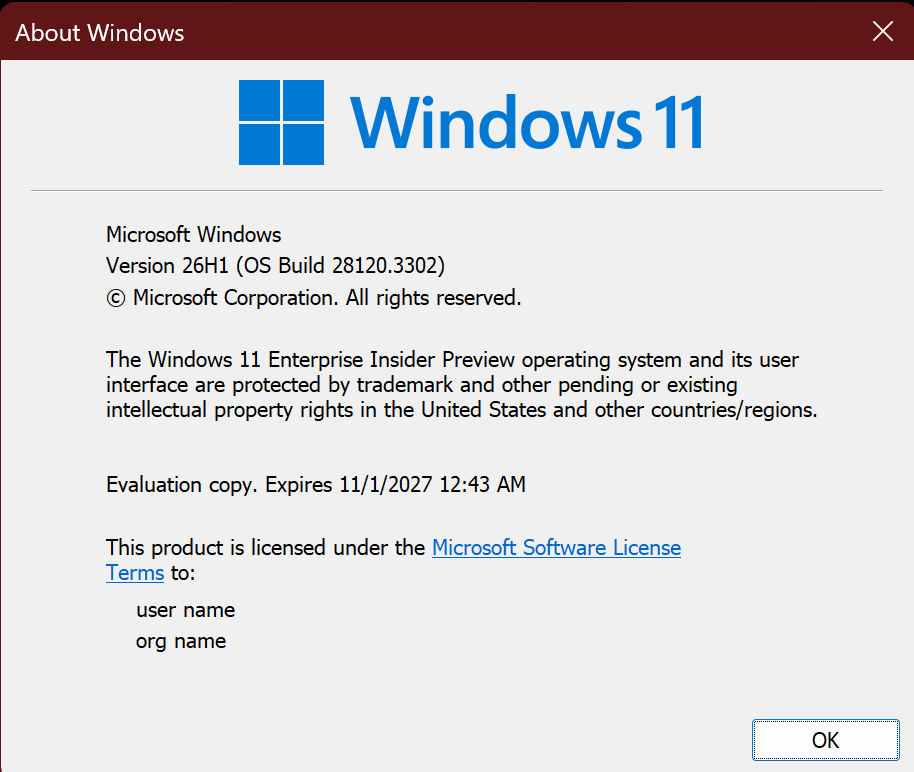
screenshot of Winver showing build 28120.3302
Smooth upgrades for mt devices, Happy Upgrades!
Changes and improvements gradually being rolled out*
This update includes a small set of general improvements and fixes that improve the overall experience for Insiders running this build on their PCs.
[Start menu]
This update makes the Start menu more personal with several customizations.
You can choose between a small or large Start menu, in addition to the Automatic (default) option that’s available today. To customize this setting, go to Settings > Personalization > Start > Start menu size.
The Recommended section is renamed Recent in the Start menu and on the Start settings page (Settings > Personalization > Start).
You can now hide your name and profile picture in Start by going to Settings > Personalization > Start > Hide your name and profile picture on Start.
The Start menu settings page is now redesigned with section-level toggles to independently show or hide Pinned, Recent, and All.
[Manage camera, microphone, and location access for desktop apps]
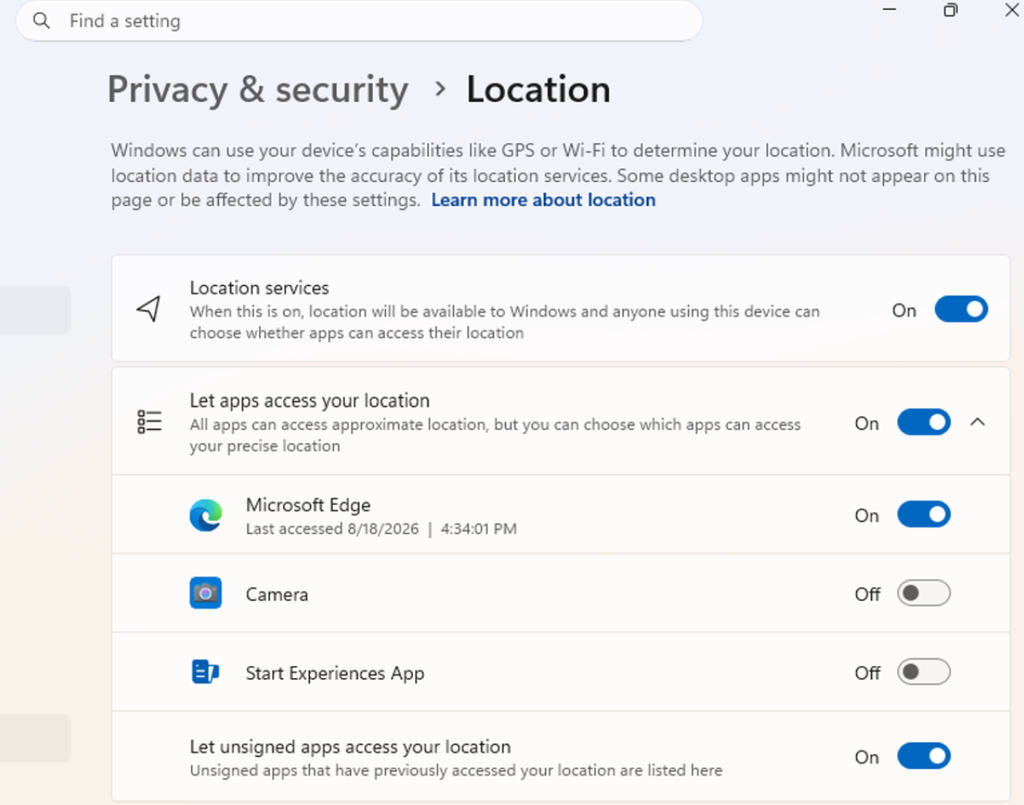
Windows Insiders can now manage camera, microphone, and location permissions for individual desktop apps. Previously, access for traditional desktop applications was managed through a single device-wide setting.
With this update, you can review and control access on an app-by-app basis, giving you greater visibility into which apps are requesting access to sensitive resources and more control over your privacy choices. Our goal is to make privacy permissions easier to understand and manage across the wide range of desktop apps people use every day.
UI showing the new privacy controls for individual desktop apps in Settings.
What’s changing
Allow or deny access for each desktop app individually.
Go to Settings > Privacy & security > Camera, Microphone, or Location to review and manage permissions.
Apps that haven’t yet accessed a resource prompt for permission the first time access is requested.
What stays the same
Existing app permission decisions are preserved.
Apps previously granted access continue to have access.
Apps previously denied access remain denied.
No action is required, and no settings are reset.
Existing enterprise policies continue to function as designed. We’re exploring additional management capabilities.
Notes
Most desktop apps appear with clear app attribution. However, some apps that rely on shared system components, browser-hosted experiences, or similar technologies might appear under a different name than expected.
Some desktop apps might appear as Unsigned if Windows can’t verify publisher information. Only grant access to apps you recognize and trust.
Feedback: Share your thoughts in Feedback Hub (WIN + F) under Settings > Privacy Settings.
[Recovery]
We’re adding a new entry point for Cloud Rebuild under Settings > System > Recovery, making it easier to access the feature from Settings.
[File Explorer]
We’ve sharpened file thumbnails in the Recommended section on the Home page so they’re crisper and easier to read.
[Magnifier]
A new contrast theme toggle for a lower-glare screen. If bright screens are uncomfortable, many people use color inversion to reduce glare. However, inversion changes everything on screen, including photos, charts, and videos. With this update, we’re introducing a new contrast theme toggle in Magnifier.
Reduce glare with a single toggle. Turn on a contrast theme directly from the Magnifier toolbar for a more comfortable viewing experience.
Choose the contrast theme that works best for you. The dark theme is applied by default, and you can choose which contrast theme the toggle uses under Settings > Accessibility > Magnifier.
Photos, videos, and charts keep their original colors. Unlike color inversion, the contrast theme recolors the interface without touching your photos, charts, or videos, so they keep their real colors.
Color inversion is still here. This isn’t a replacement. If you use inversion today, it works exactly as it always has. The contrast theme is a separate, purpose-built option to reduce glare when you want a darker interface without inverting colors.
UI showing the new contrast theme toggle in Magnifier.
UI showing contrast theme settings for Magnifier.
Magnifier now understands each of your displays
More and more of the work people do happens across more than one screen. You draft on one display and keep source material open on another. You fill in a form while a reference document sits beside it. Those extra displays can be more helpful when each one can do its own job, and now Magnifier supports exactly that.
To use this update, set your monitors to Extend in System > Display, not Duplicate, so Windows treats each screen as its own space.
Every screen keeps its own view at its own zoom. In earlier versions of Magnifier, zooming in stretched a single magnified view across all of your displays, so one screen’s zoom followed you everywhere and screen edges blurred together. With this update, each monitor’s boundary is respected, and each monitor can have its own zoom percentage. Your writing screen can be at 300% while your reference screen stays at 150%, and the magnified view no longer spills from one display into the next. This behavior matters because different tasks and screen resolutions often require different levels of magnification to remain comfortable to read.
Setting the zoom on each screen is easy. Choose whichever method feels natural:
Move your mouse pointer onto the screen you want to adjust, then press Windows key + Plus (+) or Windows key + Minus (-), or hold Ctrl + Alt and rotate your mouse wheel.
Set the percentages directly in Accessibility > Magnifier.
Drag the Magnifier toolbar onto a specific screen to adjust that screen from its on-screen controls.
Magnifier with Zoom per display enabled, allowing each monitor to maintain its own zoom level.
Per-monitor zoom is turned on by default. If you prefer the classic behavior where a single zoom spans all of your displays, you can turn per-monitor zoom off at any time from either the Magnifier toolbar or Accessibility > Magnifier. You can turn it back on whenever you like.
Keep the view that matters, right where you need it
As you move your mouse from screen to screen, the magnified view naturally follows your pointer. Sometimes this might cause you to lose sight of the content that you’re actively working on.
Viewport locking keeps that view in place. For example, you might be drafting an email based on a section of a document open on another display. Position that display so the paragraph you need is in view, press Ctrl + Windows key + K, and the screen holds its view steady while you move your cursor over to write. The locked screen stays fully live and interactive, so you can glance back, click, or copy from it whenever you need to, and its view stays put until you release it.
A message appears on the screen when it’s locked, so you always know what’s being held. To lock or unlock a screen, point your mouse at that screen and press Ctrl + Windows key + K again. To release everything at once, press Windows key + Esc to dismiss all locks. To use a different key combination, you can switch the lock shortcut to Ctrl + Alt + P in Accessibility > Magnifier.
Magnifier’s multiple display controls include independent zoom and view locking options.
[Unicode]
This update provides Windows text shaping support for Unicode 17.0, helping Windows correctly display and shape newly encoded characters and scripts. Unicode 17.0 added 4,803 characters, including support for four newly encoded scripts: Beria Erfe, Sidetic, Tai Yo, and Tolong Siki. These updates help keep Windows text support current as the Unicode Standard evolves and improve support for languages and writing systems used by people around the world.
[Known Issues]
We are aware that Recall may be missing or unable to launch on some Copilot+ PCs if performing a clean install on this build. We are working to resolve soon and will provide an update.
Hi all, last Friday Microsoft released Windows 11 Build 26340.9767 to the Experimental Channel
This flight has a bunch of new stuff, all smoothly installed on my Experimental devices.
Happy Flighting!
Changes and improvements gradually being rolled out
[Windows Insider Program]
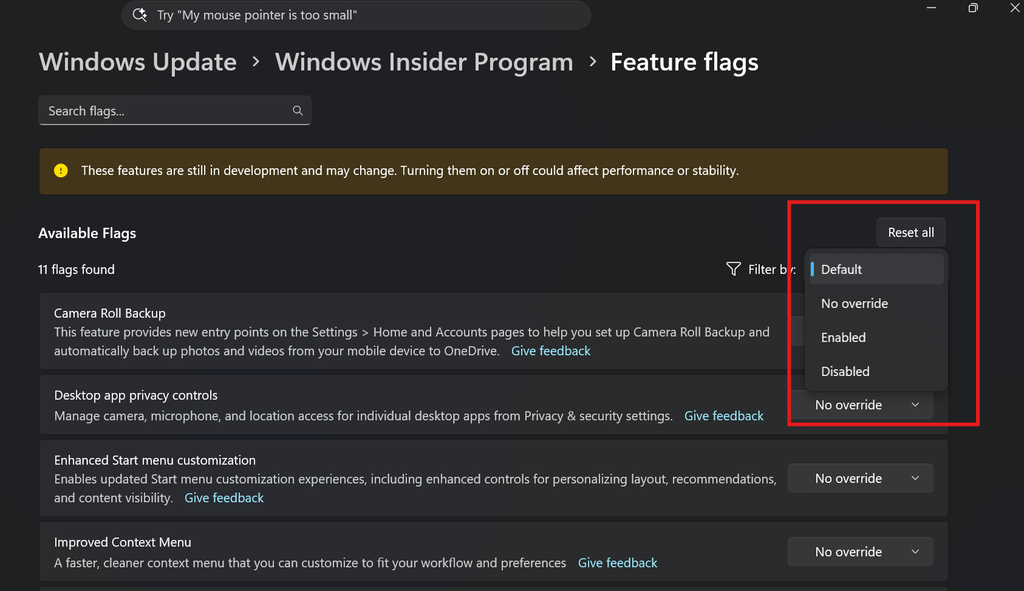
We’ve added the ability to filter Feature flags by enablement state.
Feature flags filtered by enablement state on the Windows Insider Program settings page.
[Quick Settings]
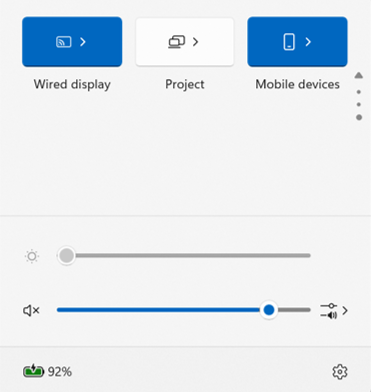
Access your phone controls from Quick Settings
We’re beginning to roll out a new Mobile devices experience in Quick Settings, making it easier to take quick phone actions (such as ring your phone) without breaking your flow on Windows.
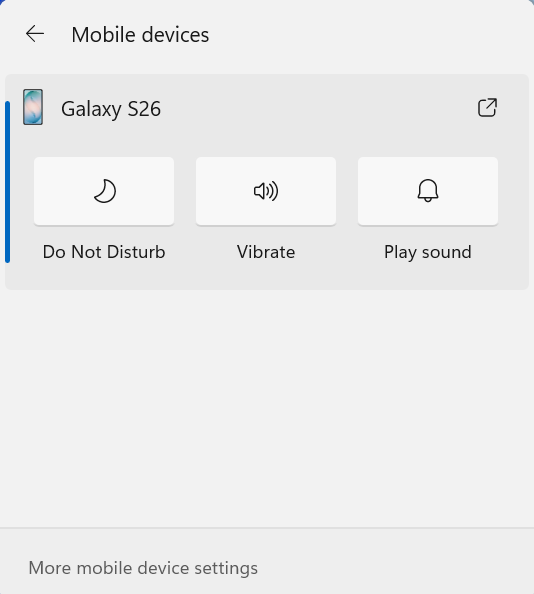
With your supported Android phone connected, everyday actions are now just a click away. You can turn Do Not Disturb on before a meeting, change your phone’s ringer mode, and play a sound to find your phone nearby.
It’s a simpler, faster way to manage your phone from the place you already use for quick Windows actions, helping your PC and phone work better together throughout the day.
Capabilities can vary by phone platform and device configuration. The initial experience provides the most complete set of controls for Android phones, while iPhone support starts with a more limited status-focused experience.
How to try it
Open Quick Settings from the taskbar and look for Mobile devices. If your phone is already connected, you’ll see available battery status and controls there. If you haven’t connected a phone yet, Windows will help you get set up.
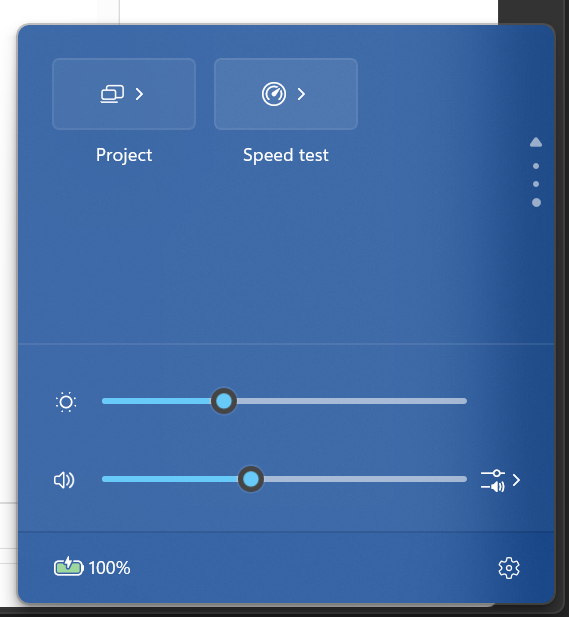
UI showing the Mobile devices experience in Quick Settings.
UI showing Mobile devices controls in Quick Settings for managing your connected Android phone.
Check your internet speed directly from Quick Settings
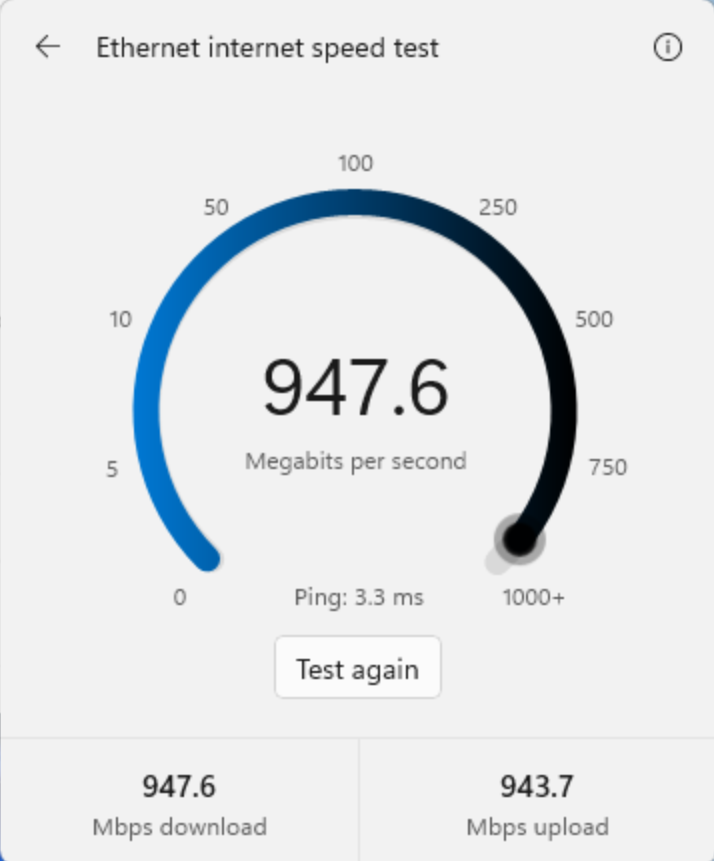
We’re making it faster and easier to check the performance of your internet connection in Windows. Windows Insiders can now run an internet speed test and see the results directly in Quick Settings, without being redirected to a browser.
Start a test from the new Speed test Quick Setting, from the Wi-Fi or Cellular flyout, or by right-clicking the network icon in the system tray and selecting Test internet speed. While the test runs, Quick Settings shows its progress and results, including download speed, upload speed, and ping.
Because the test runs against your active internet connection, you can quickly understand how your current connection is performing without leaving your workflow. This updated experience builds on the internet speed test we previously introduced for Windows Insiders, bringing the test and its results directly into Windows.
Internet speed test results in Windows.
Speed test in Quick Settings.
[Magnifier]
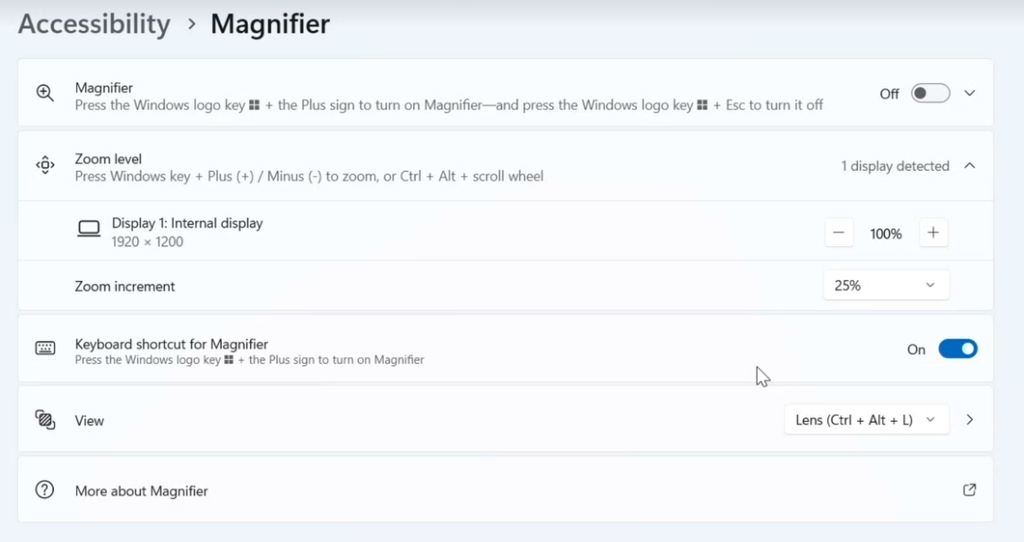
We’ve added a Keyboard shortcut for Magnifier toggle in Settings > Accessibility > Magnifier. It lets you choose whether pressing Windows logo key + Plus (+) launches Magnifier.
The shortcut stays on by default, so nothing changes unless you want it to. If you find that Magnifier starts by accident, or the shortcut conflicts with another app or keyboard layout, turn the toggle off. You can still start Magnifier from Settings, and you can turn the shortcut back on at any time.
New toggle to turn the Magnifier keyboard shortcut on or off.
[Microsoft 365 subscription in Windows]
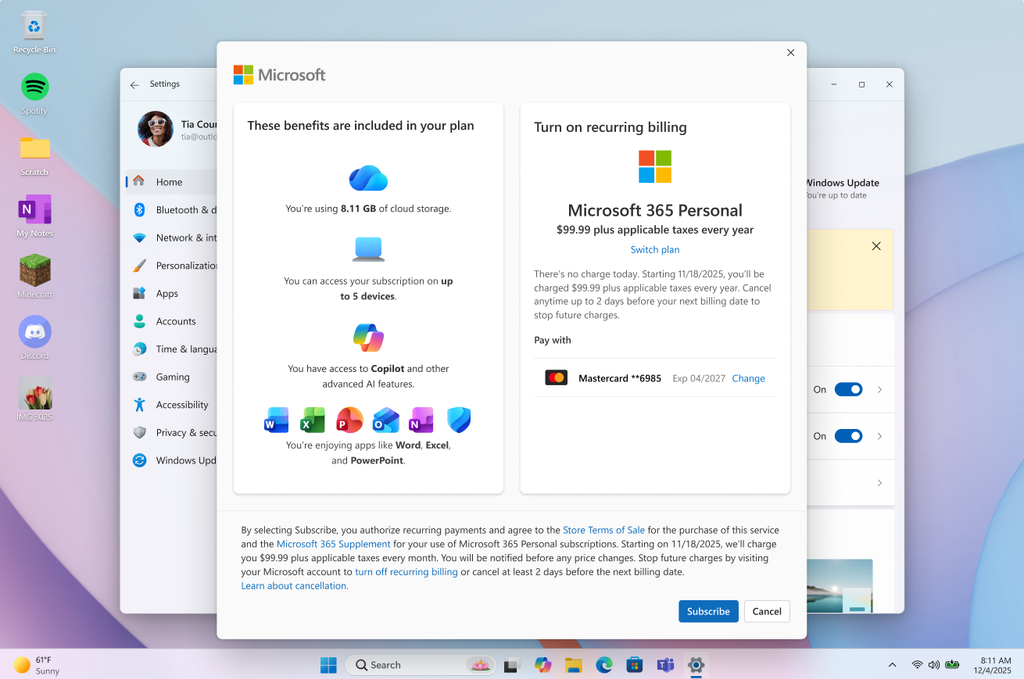
We’re introducing a new inline experience that makes it easier for Microsoft 365 subscribers to manage their subscriptions in Windows. Subscribers who have recurring billing turned off can now turn it back on directly in Windows Settings, without leaving for a separate webpage. To get started, select Turn on recurring billing or Set up recurring billing from the Windows Settings Home page, the Accounts page, or the Start menu.
Turn on recurring billing for your Microsoft 365 subscription directly in Windows.
[File Explorer]
Improved progress indication when navigating to locations that take longer to load, such as network drives, making it easier to see that loading is underway.
[Narrator]
Narrator now supports additional languages for math reading, including Greek, Hungarian, Indonesian, Norwegian (Bokmål), Polish, Russian, Swedish, and Vietnamese.
[Widgets]
The Widgets picker now has a standard Windows dialog frame and supports light and dark title bars. It also removes the blank space previously left for an icon.
[Taskbar]
Fixed an issue with the previous update where explorer.exe wouldn’t load after logging in, preventing the taskbar and other elements that rely on it from loading.
[Windows login]
Fixed an issue with the previous update that was causing some Insiders to erroneously see a message saying their password was wrong on the login screen.
How Windows 365 protects your Microsoft 365 tenant and corporate data when contractors connect from unmanaged endpoints.
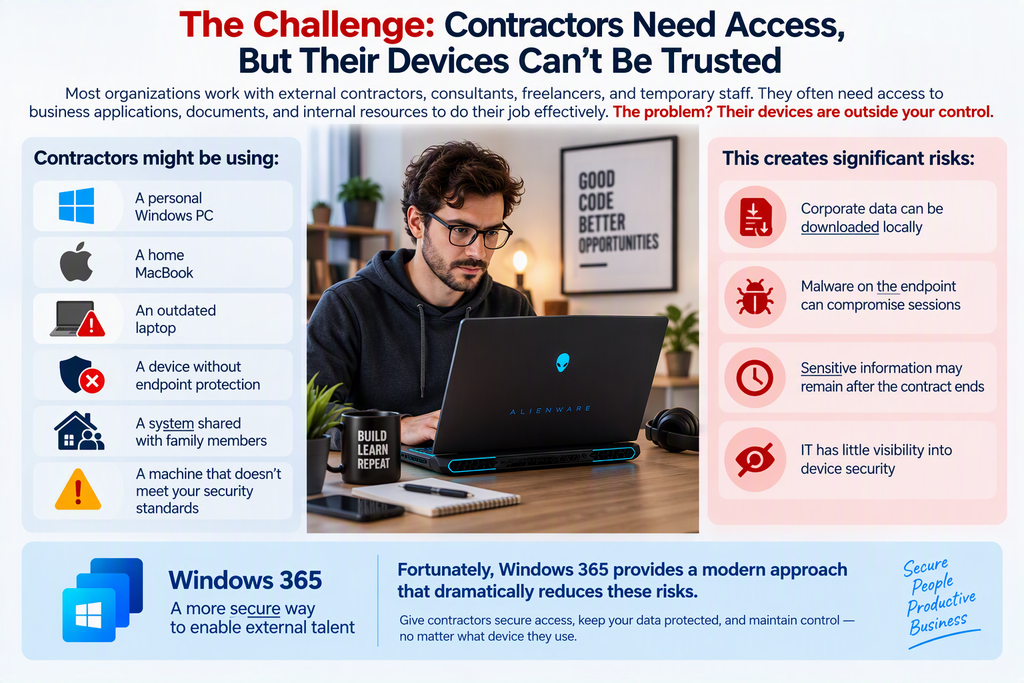
The Challenge: Contractors Need Access, But Their Devices Can’t Be Trusted
Most organizations work with external contractors, consultants, freelancers, and temporary staff. They often need access to business applications, documents, and internal resources to do their job effectively.
The problem? Their devices are outside your control.
A contractor might be using:
A personal Windows PC
A home MacBook
An outdated laptop
A device without endpoint protection
A system shared with family members
A machine that doesn’t meet your security standards
Traditionally, granting access from these unmanaged devices creates significant risks:
Corporate data can be downloaded locally
Malware on the endpoint can compromise sessions
Sensitive information may remain after the contract ends
IT has little visibility into device security
Fortunately, Windows 365 provides a modern approach that dramatically reduces these risks.
Introducing Windows 365 Cloud PCs
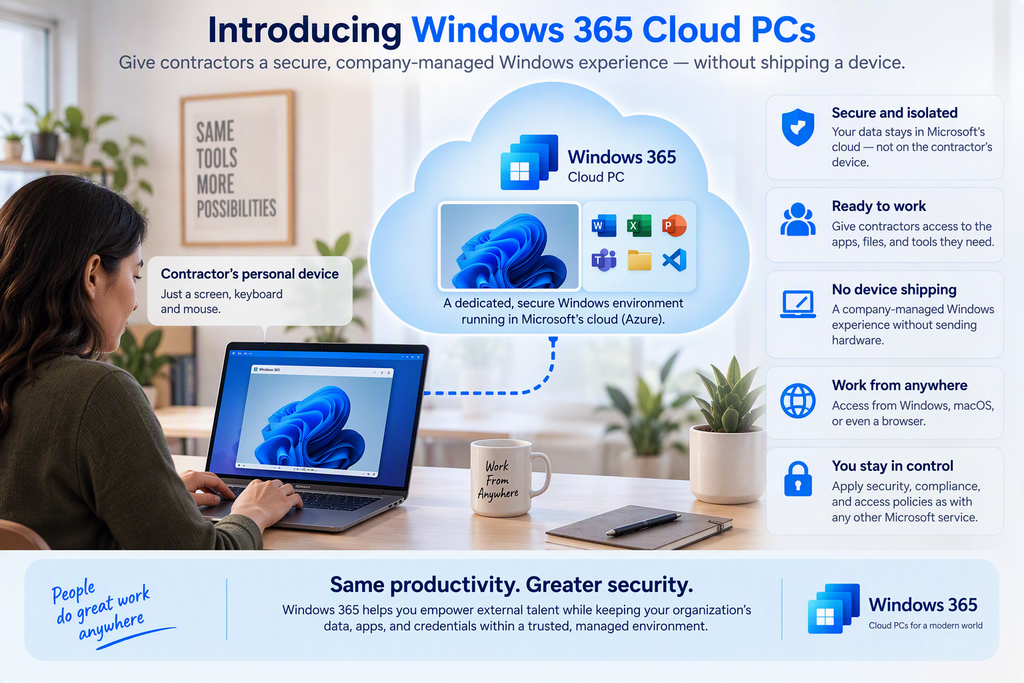
Windows 365 gives each contractor a dedicated Cloud PC hosted in Microsoft’s cloud. Instead of working directly on their local device, users interact with a secure Windows environment running in Azure.
Think of it as giving contractors a company-managed laptop without actually shipping them one.
The user’s personal device becomes little more than a screen, keyboard, and mouse.
The Security Boundary Moves to the Cloud
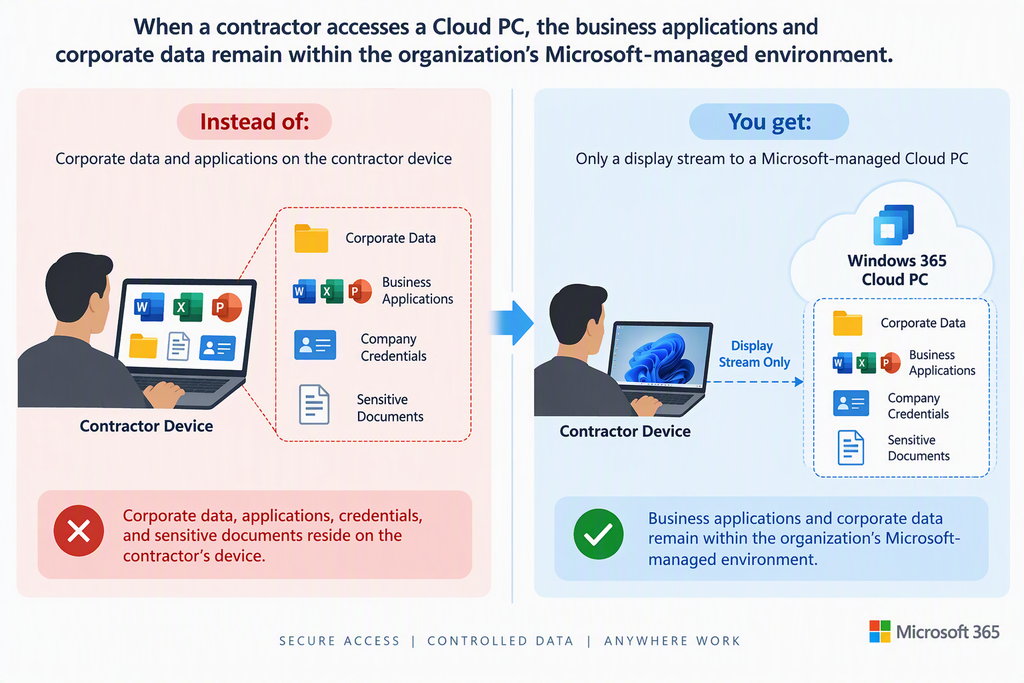
When a contractor accesses a Cloud PC, the business applications and corporate data remain within the organization’s Microsoft-managed environment.
This separation significantly reduces the attack surface.
Data Stays Inside Your Tenant
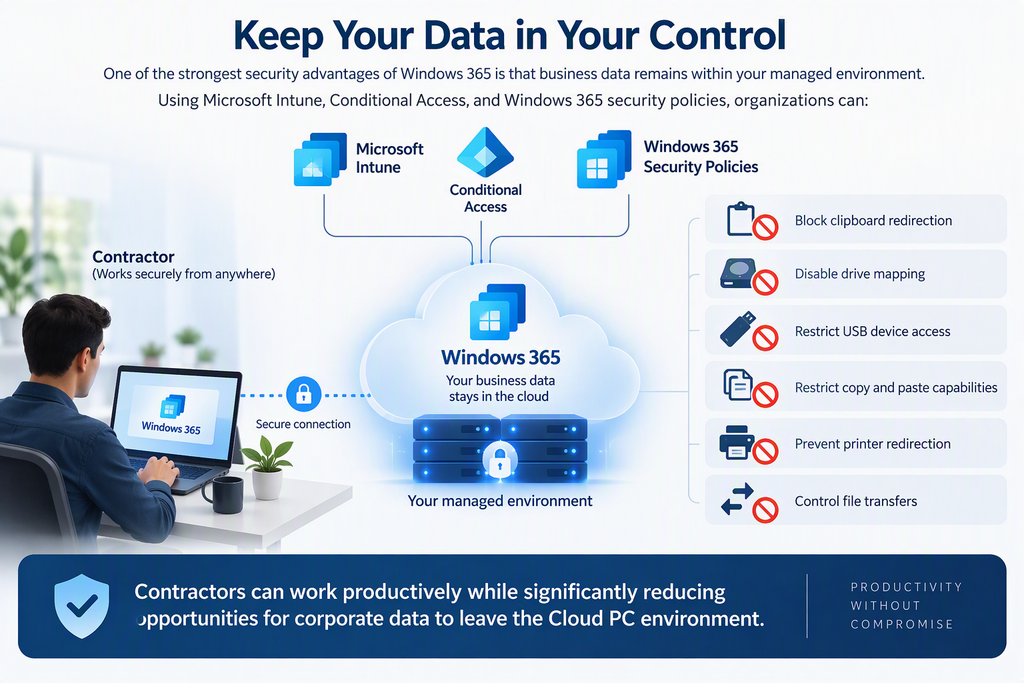
One of the strongest security advantages of Windows 365 is that business data remains within your managed environment.
Using Microsoft Intune, Conditional Access, and Windows 365 security policies, organizations can:
Block clipboard redirection
Disable drive mapping
Restrict USB device access
Prevent printer redirection
Control file transfers
Restrict copy and paste capabilities
As a result, contractors can work productively while significantly reducing opportunities for corporate data to leave the Cloud PC environment.
Example
A finance contractor needs access to salary information.
Without Windows 365
With Windows 365
Excel files are downloaded to the contractor’s laptop.
Files remain in the Cloud PC.
Data may be cached locally.
Data never needs to be stored on the personal device.
Files could remain after the contract ends.
Access can be revoked instantly.
Device Compliance No Longer Becomes a Roadblock
Many organizations struggle with Onboard-Your-Own-Device scenarios because they cannot enforce security standards on external devices.
Windows 365 helps because the managed Cloud PC becomes the trusted workspace.
IT can enforce:
Microsoft Defender for Endpoint
BitLocker encryption
Intune compliance policies
Security baselines
Windows updates
Application control
Privileged access controls
Even if the contractor’s local device falls outside these standards, the corporate workload remains protected within the managed Cloud PC.
Strong Identity Controls with Conditional Access
Windows 365 integrates with Microsoft Entra ID and Conditional Access.
Organizations can require:
Multi-factor authentication
Sign-in risk evaluation
Location restrictions
Device-based conditions
Session controls
Continuous access evaluation
If Microsoft detects suspicious activity, access can be blocked before the Cloud PC session is established.
Example
A contractor normally signs in from Belgium.
An hour later a sign-in attempt occurs from another region with elevated risk indicators.
Microsoft Entra ID can:
Flag the login
Challenge the user with MFA
Block the session
Require additional verification
Before the contractor reaches any corporate resources.
Fast Onboarding and Offboarding
Traditional contractor onboarding often includes:
Ordering hardware
Shipping devices
Imaging machines
Configuration work
Hardware returns at end of contract
Windows 365 simplifies the process.
Onboarding
Create contractor account.
Assign license.
Deploy Cloud PC.
Provide access.
A new contractor can often be productive within hours.
Offboarding
When the engagement ends:
Disable the account.
Revoke sessions.
Remove license.
Delete Cloud PC if required.
Access disappears immediately.
No hardware collection process required.
Reduced Risk from Malware on Personal Devices
Let’s be realistic.
A compromised contractor device remains a risk. Keyloggers, screen capture malware, and browser compromise can still affect the user experience.
However, Windows 365 significantly limits the damage compared to providing direct access from unmanaged devices.
Benefits include:
Corporate applications run in Microsoft-managed infrastructure.
Data remains inside the Cloud PC.
Security tools monitor the Cloud PC continuously.
Suspicious activity can trigger automated responses.
Access can be terminated centrally.
Rather than exposing your entire environment to an unmanaged endpoint, you’re exposing a controlled virtual workspace.
Monitoring and Investigation
Because Cloud PCs are enterprise-managed devices, security teams gain visibility that would otherwise be impossible on contractor-owned hardware.
Security teams can:
Monitor sign-ins
Investigate incidents
Review Defender alerts
Apply compliance policies
Perform forensic investigations
Audit user activity
This provides a much stronger security posture compared to traditional BYOD access.
Real-World Scenario
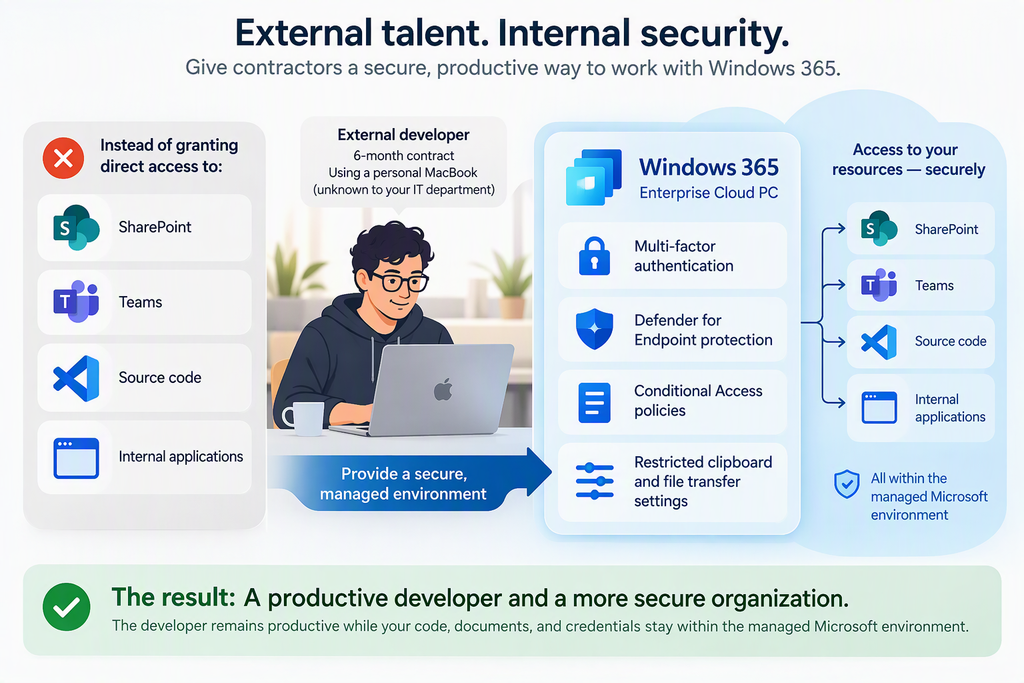
Imagine hiring a six-month external developer.
The developer uses a personal MacBook that is unknown to your IT department.
Instead of granting direct access, you provide:
The developer remains productive while the organization’s code, documents, and credentials stay within the managed Microsoft environment.
Best Practices for Windows 365 Contractor Access
To maximize security:
Use Microsoft Entra ID Conditional Access.
Require MFA for all contractor accounts.
Enable Microsoft Defender for Endpoint on Cloud PCs.
Block unnecessary redirection features.
Apply Intune security baselines.
Use least-privilege access.
Review contractor accounts regularly.
Automate offboarding processes.
Monitor risky sign-ins and Defender alerts.
Separate contractors into dedicated security groups.
Final Thoughts
External contractors are often necessary for business growth, but unmanaged devices should not become a weak link in your security strategy.
Windows 365 offers a practical middle ground. Contractors can work from almost any device while your applications, data, and security controls remain inside a managed Microsoft environment.
Instead of trusting the endpoint, organizations can shift trust to identity, policy, and a centrally managed Cloud PC.
For many organizations, that is one of the most effective ways to balance security, compliance, and contractor productivity in the modern workplace.
In October 2014, Microsoft launched the Windows Insider Program and invited enthusiasts, IT professionals, developers, and curious users to help build the future of Windows. Twelve years later, that experiment has grown into one of the most successful customer feedback programs in the technology industry.
My Windows Insider Journey, From Day One
For me, this anniversary is also a personal one. I’ve been part of the Windows Insider community since day one, back when we were downloading those first Windows 10 Technical Preview builds and discovering what Microsoft’s new approach to Windows development would actually mean.
Over the past twelve years, I’ve installed more Insider builds than I could possibly count. Some were incredibly stable, others reminded you very quickly why they were called preview builds.
But that has always been part of the fun.
Being a Windows Insider means getting an early look at what Microsoft is working on, testing new ideas, reporting problems, and watching features evolve between builds. Sometimes a feature you really liked disappeared again. Sometimes something that initially seemed like a small experiment eventually became part of Windows used by millions of people.
For someone like me who works with Microsoft technology every day, the Insider Program has also been an invaluable way to stay ahead. It gives you the opportunity to understand upcoming changes before they reach customers and production environments.
After twelve years, I’m still excited when a new Insider build drops and there is something new to discover.
Windows Insider since day one, and still Insiding twelve years later.
From Test Builds to a Global Community
Over the past twelve years, the Windows Insider Program has evolved dramatically.
Insiders have helped test:
Windows 10
Windows 11
New Microsoft applications
Accessibility improvements
Security features
AI-powered experiences
Device management capabilities
User interface redesigns
The program itself also evolved. We’ve seen the introduction of Insider Rings, followed by the modern Channel model that includes Canary, Dev, Beta, and Release Preview channels. This provides organizations and enthusiasts with multiple levels of access depending on how much risk they are willing to accept.
For IT professionals, the Release Preview channel in particular has become an invaluable tool for validating business-critical applications before broad deployment.
Why the Insider Program Matters
Many Windows features that we take for granted today were refined thanks to Insider feedback.
Whether it was improvements to the Start menu, File Explorer, Windows Search, Windows Hello, accessibility features, or enterprise management capabilities, feedback collected through the Feedback Hub has influenced countless decisions over the years.
From an enterprise perspective, the program delivers several important benefits:
Early Validation
Organizations can test new Windows builds before deployment and identify potential compatibility issues early.
Better Deployment Planning
IT teams gain visibility into upcoming changes months before they reach production environments.
Influence on Development
Unlike traditional beta programs, the Windows Insider Program allows organizations to directly submit feedback and feature requests through official channels.
Improved Security
Many security features reach Insider channels first, giving security teams the opportunity to evaluate their impact and prepare for future rollouts.
The Program’s Lasting Impact on Windows
Perhaps the greatest achievement of the Windows Insider Program is that it fundamentally changed how Microsoft develops Windows.
The release cadence became more agile. Features could be validated earlier. Issues could be addressed before reaching millions of devices. Most importantly, customers became active participants rather than passive recipients.
Today, it feels normal for Microsoft to release preview builds every week and gather feedback continuously. In 2014, that level of transparency was unprecedented for an operating system used by hundreds of millions of people worldwide.
Looking Ahead
As Windows continues to evolve with AI-powered experiences, stronger security baselines, cloud integration, and support for new hardware architectures, the Insider community remains as important as ever.
Many of today’s innovations first appear in Insider builds before making their way into production devices. The program continues to serve as Microsoft’s proving ground for the next generation of Windows experiences.
Celebrate 12 Years With the Anniversary Wallpapers
Of course, an anniversary also deserves something special for your desktop.
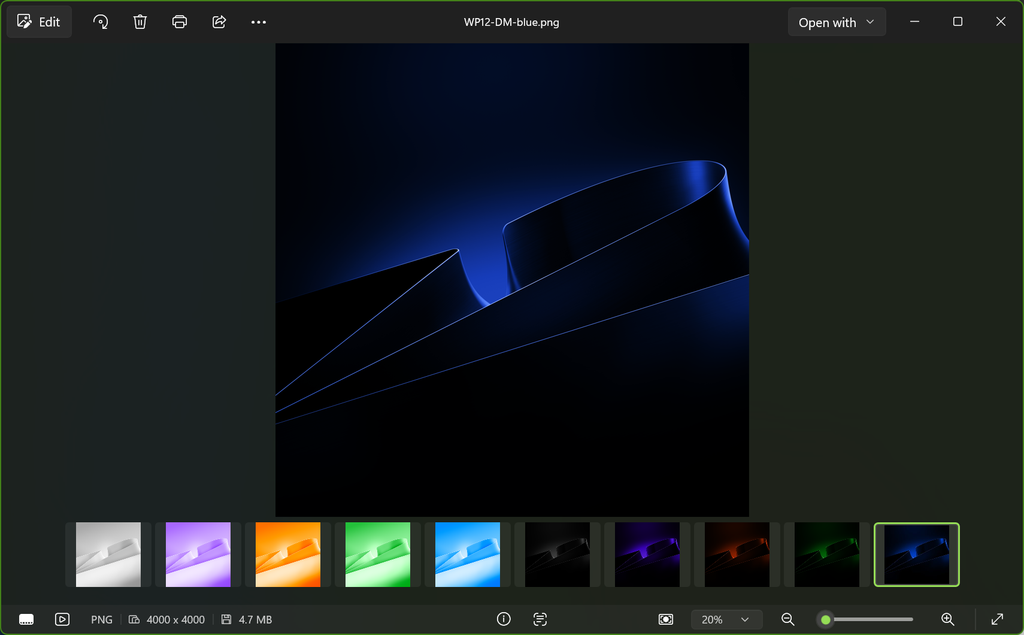
For the 12th anniversary of the Windows Insider Program, Microsoft has created special Windows Insider anniversary wallpapers, giving Insiders a nice way to celebrate the milestone on their own devices.
For long-time Insiders, wallpapers like these are more than just another desktop background. They are a small reminder of how far Windows and the Insider community have come since those first Windows 10 Technical Preview builds in 2014.
So if you’re celebrating twelve years of the Windows Insider Program, why not give your Insider PC an anniversary makeover as well?
And if you’re anything like me, there’s a good chance that anniversary wallpaper will end up on at least one of your Windows devices.
Here are the Wallpapers in Dark Mode and Light Mode:
Twelve years after its launch, the Windows Insider Program remains a remarkable example of collaboration between a technology company and its users.
Whether you’ve been installing preview builds since the very first Windows 10 Technical Preview in 2014 or you’ve only recently joined the program, every piece of feedback has contributed to shaping the Windows experience we know today.
Here’s to twelve years of testing, breaking things, finding bugs, submitting feedback, and helping build a better Windows for everyone.
Happy 12th anniversary to every Windows Insider, whether you joined in 2014 or installed your first Insider build this week.
Are you a Windows Insider? What was your favorite Insider feature or moment over the last twelve years? Let us know in the comments below.
Over the last few days I’ve seen a lot of reports that the latest Windows security update is “breaking” WPA2-Enterprise Wi-Fi, 802.1X authentication, VPNs and other RADIUS-based connections.
Let’s be clear:
This is not a bug. This is a planned security hardening change that Microsoft announced well in advance (August 2025).[support.mi…rosoft.com], [mc.merill.net]
The October 2026 security update changes the default behavior for NTLMv1-derived Single Sign-On (SSO) credentials from Audit to Enforce mode on systems where Credential Guard is disabled and the BlockNtlmv1SSO registry value is not configured.
Why are Wi-Fi and RADIUS environments affected?
Many legacy enterprise Wi-Fi, wired 802.1X and VPN deployments still rely on:
PEAP-MSCHAPv2
EAP-MSCHAPv2
Other MS-CHAPv2-based authentication methods
These technologies depend on NTLMv1-derived cryptography for SSO scenarios. Microsoft has been warning that NTLM is being phased out and that organizations should move away from these legacy methods. [support.mi…rosoft.com], [learn.microsoft.com]
Yes, this can restore connectivity by putting the device back into Audit mode. However:
This is not the fix.
It is only a temporary workaround that re-enables behavior Microsoft is actively retiring. Microsoft explicitly states that Audit mode should only be treated as a temporary exception while organizations remediate their environment.
Here are Intune Custom Remediation Scripts to deploy the key:
Review their wireless and VPN authentication design
Identify dependencies on PEAP-MSCHAPv2 and EAP-MSCHAPv2
Move to certificate-based authentication where possible
Enable Credential Guard where supported
Eliminate reliance on NTLMv1-derived authentication paths
Microsoft specifically recommends moving Wi-Fi and VPN deployments from MS-CHAPv2-based authentication to certificate-based solutions such as EAP-TLS or PEAP-TLS. [learn.microsoft.com], [support.mi…rosoft.com]
My recommendation
If your users suddenly lost connectivity after installing the October update:
Use BlockNtlmv1SSO=0 only as an emergency workaround.
Enable Credential Guard where supported.
Audit your wireless, wired 802.1X, VPN and RADIUS infrastructure.
Plan your migration away from MS-CHAPv2 and NTLMv1-derived authentication.
The update is doing exactly what Microsoft said it would do. The registry change merely buys time. The real work is modernizing the authentication architecture before NTLM finally disappears from Windows.
Hi all, last Friday Microsoft released Windows 11 Build 28120.3272 to the Experimental (26H1) Channel.
Some nice accessibility updates in this build make sure to test them out.
Enjoy Upgrading!
Changes and improvements gradually being rolled out*
This update includes a small set of general improvements and fixes that improve the overall experience for Insiders running this build on their PCs.
[Search]
Search home has been simplified to reduce visual clutter and make it easier to get back to recent searches quickly.
Search does a better job showing where a result comes from, whether it’s an app, setting, file, web result, or Store suggestion, so it’s easier to tell what you’re looking at and where you’ll go before you click.
A new setting in Settings > Privacy & security > Search lets you choose whether web and Microsoft Store suggestions appear alongside local results.
[Pointer Indicator]
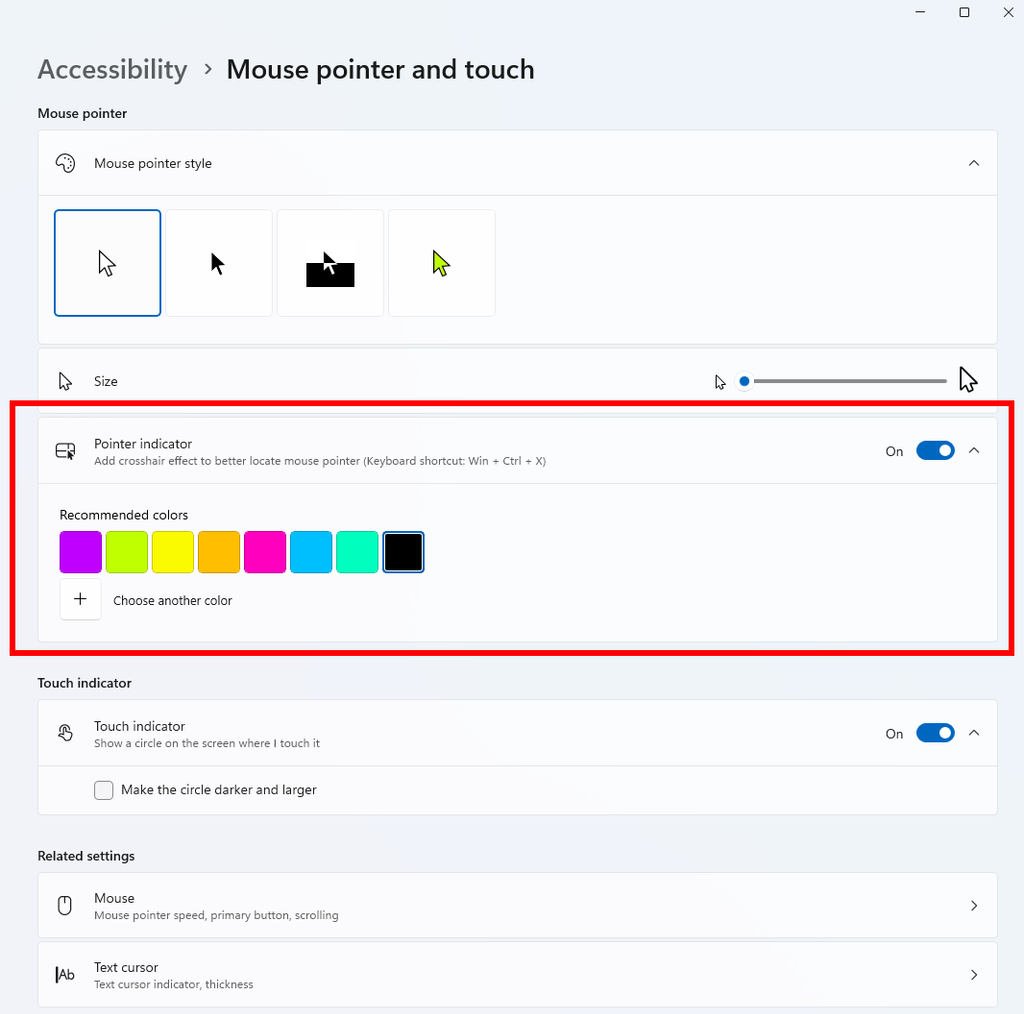
We’re introducing the Pointer Indicator accessibility setting. This feature enables Windows users with low vision to easily locate and use their cursor to increase productivity and efficiency when using a Windows device.
To enable this experience, go to Settings > Accessibility > Mouse pointer and touch, and enable the Pointer indicator setting. You can also search for the setting by name. When the setting is enabled, you can toggle it on or off with the keyboard shortcut, Windows logo key + Ctrl + Shift + X.
The Pointer indicator and its settings under Mouse pointer and touch.
[Live Captions]
We’re improving Live Captions with a new Include Screen Reader audio setting, which is off by default. With the setting off, Live Captions won’t transcribe audio from screen readers such as Narrator, JAWS, and NVDA, keeping captions focused on microphone and system audio.
[Settings – Privacy & security]
The improved Privacy & security page in Windows Settings helps you find the Camera, Microphone, and Location privacy controls more easily. It groups similar controls across the page and brings usage information from deeper linked pages onto this page.
[Family Safety]
Improved family safety messaging when applications are blocked because of age-restricted parental controls.
[Other]
Fixed an issue with msmpeg2ac3dec.dll which was leading to some apps and games crashing recently.
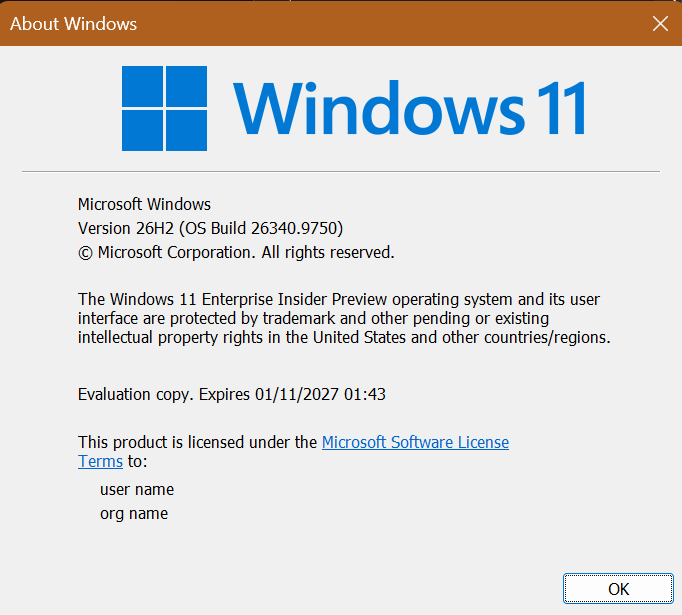
Hi all, last Friday Microsoft released Windows 11 Build 26340.9750 to the Insider Experimental Channel
Web sign-in is now available for Hybird-Joined Devices! All updates rolled out smoothly on my devices in this channel. Happy Upgrades!
Changes and improvements gradually being rolled out
[Gaming]
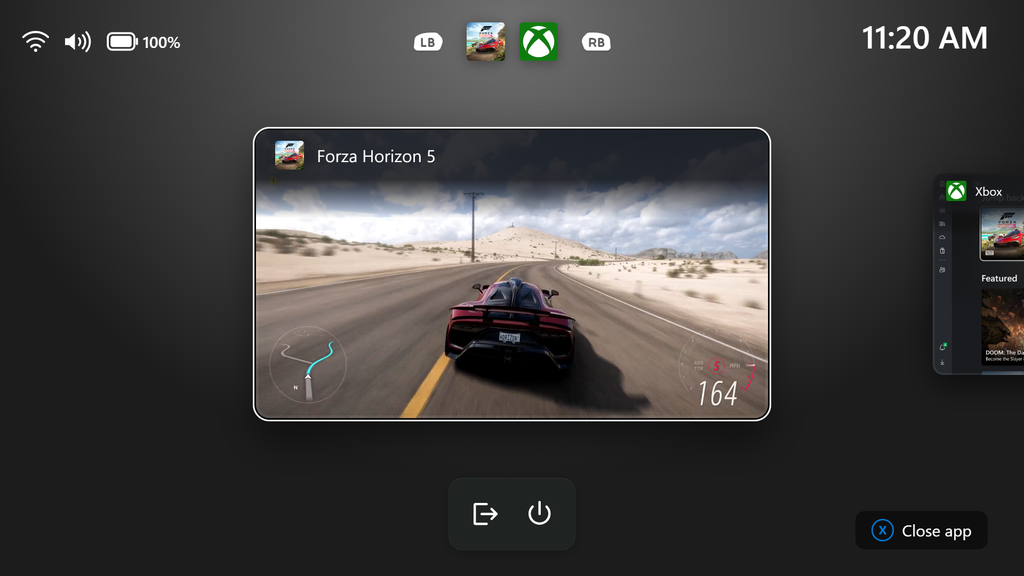
We’re introducing a refreshed Gaming Task View experience in XBOX mode, featuring a new navigation bar that provides quick access to Exit to Desktop and Power Options. This update makes key system actions easier to access while gaming.
Gaming Task View showing the new navigation bar with Exit to Desktop and Power options.
[Web sign-in]
Web sign-in now works on Microsoft Entra hybrid joined devices. Before this update, it was only available on Microsoft Entra joined devices. You can sign in to Windows at the lock screen with a passwordless credential: a FIDO2 security key, a passkey on your phone, or a Temporary Access Pass (TAP). You don’t need a password. Once you’re signed in, Windows gets a Kerberos ticket, so on-premises file shares and internal sites keep working. For more information, see Use web sign-in to enable passwordless sign-in in Windows.
[Windows Hello]
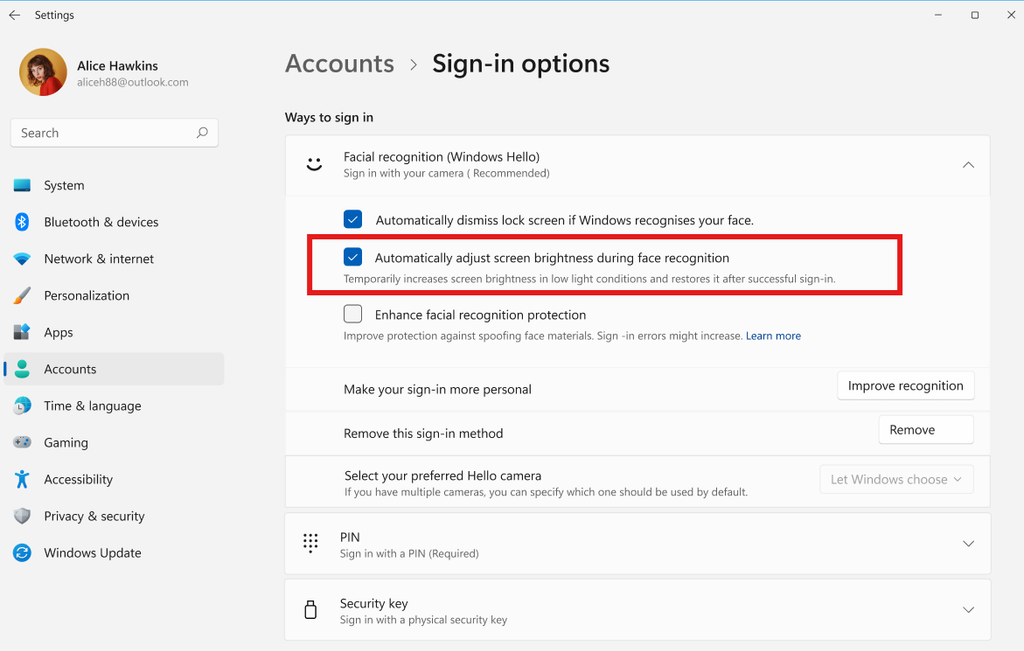
Windows Hello facial recognition can temporarily brighten your screen to help you sign in when you’re in a dark or dimly lit room.
To turn on this feature, go to Settings > Accounts > Sign-in options > Facial recognition (Windows Hello) and turn on Automatically adjust screen brightness during face recognition.
The setting to automatically adjust screen brightness during Windows Hello facial recognition.
[File Explorer]
Improved responsiveness of folder views so they update and sort correctly when files and folders are added or renamed.
[Windows Search]
Addressed underlying issues that could cause search to appear missing or stop working after the previous update, including if you rapidly clicked the search icon repeatedly.
[Run]
For Insiders with the new Run dialog enabled:
Improved the window position when using an Arabic or Hebrew display language.
Improved performance of the Run dialog when navigating to very large folders.
Fixed an issue where your text might unexpectedly disappear if you started typing too quickly after opening Run.
Made a few other small visual fixes and refinements.
[Other]
Improved shutdown reliability, reducing the chance of a hang on shutdown in certain cases.
The dialog for certain system messages, like low battery and permissions, should use the expected modern design again.
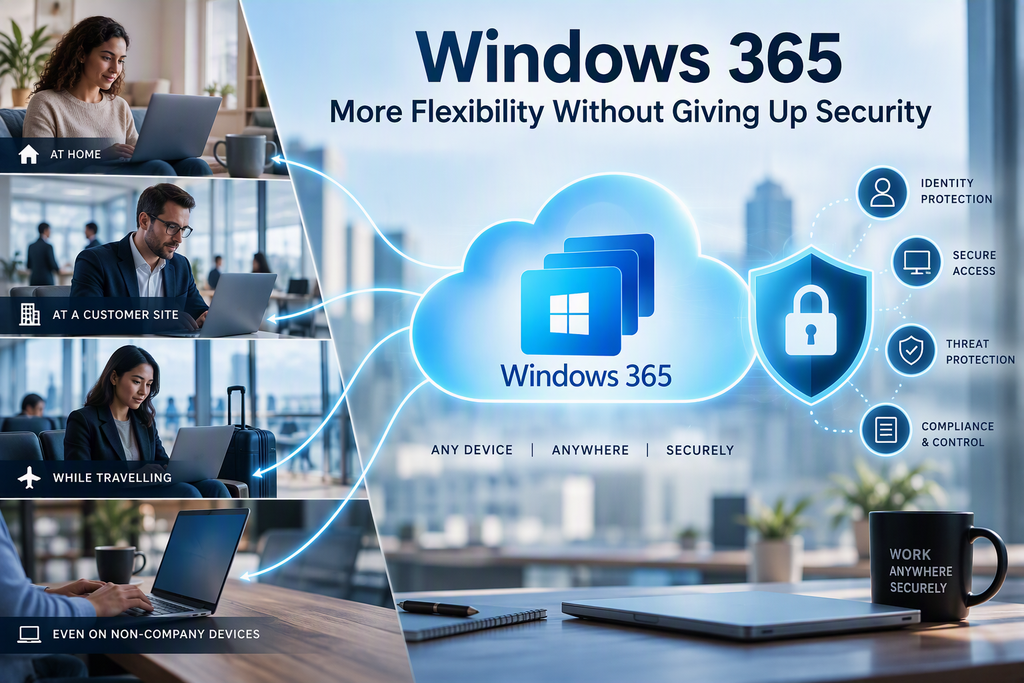
Users expect to be able to work from home, from a customer site, while travelling, or sometimes from a device that isn’t even owned by the company. For IT departments, however, every additional device and location potentially creates another security challenge.
Traditionally, flexibility and security tended to work against each other.
Give users more freedom, and you often increase the attack surface.
Lock everything down, and users start complaining that IT is making their job impossible.
Windows 365 changes that equation.
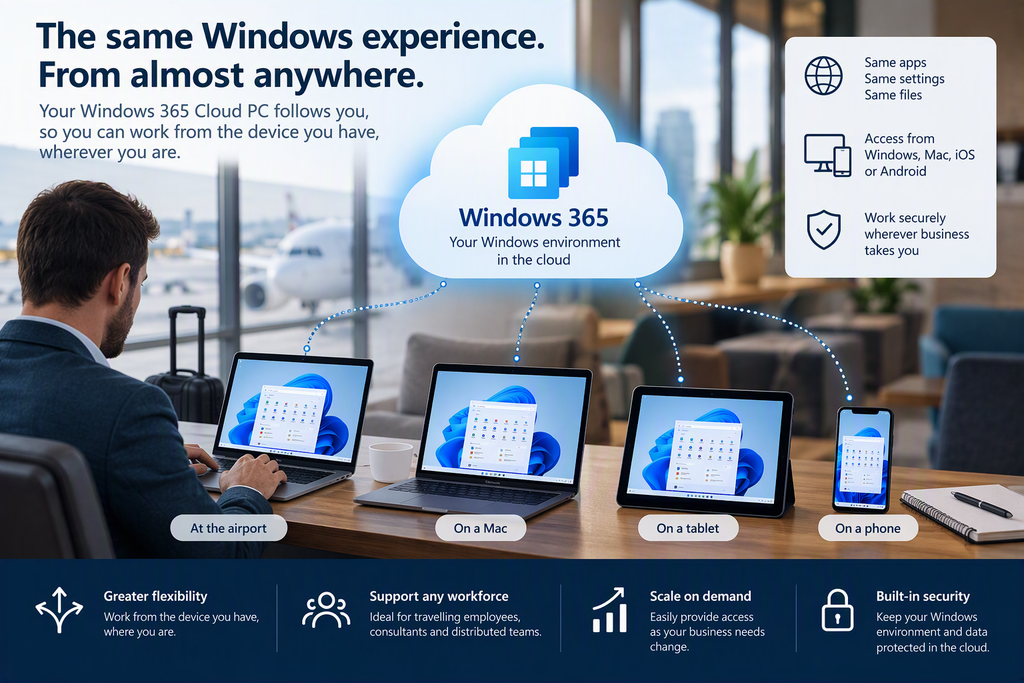
Instead of putting the corporate Windows environment directly on the device sitting in front of the user, Windows 365 provides a Cloud PC running in Microsoft’s cloud. Microsoft describes Windows 365 as providing the full Windows experience on different devices, including Windows, macOS, iOS, and Android. [microsoft.com]
That opens up some interesting possibilities.
Your PC Doesn’t Necessarily Have to Be a PC Anymore
Think about the traditional setup.
An employee receives a laptop containing:
Windows
Microsoft 365 Apps
Business applications
Company configuration
Cached corporate information
User profiles and settings
If that laptop breaks, disappears, or becomes unavailable, you suddenly have a productivity problem and potentially a security problem.
With Windows 365, the user’s Windows environment can instead live in Microsoft’s cloud.
The physical device becomes the way to access the workplace, rather than being the workplace itself.
A user could, depending on organizational policy, access their Cloud PC from a Windows computer, Mac, iOS device, or Android device. [microsoft.com]
That separation between the endpoint and the corporate Windows environment is one of the things that makes Windows 365 interesting.
Scenario 1: Working From Almost Anywhere
Imagine an employee normally working from a managed corporate Windows laptop.
They travel to another office and don’t have their laptop available.
In a traditional environment, this might mean preparing another corporate device before they can continue working.
With Windows 365, they can potentially access the same Cloud PC from another suitable device.
Their Windows environment hasn’t moved.
The access device changed.
Microsoft specifically positions Windows 365 for scenarios where organizations want users to access Windows from different devices while being able to scale Cloud PCs as business requirements change. [microsoft.com]
For organizations with consultants, travelling employees or distributed teams, that’s a big difference.
Scenario 2: Contractors and Temporary Workers
Another scenario I find particularly interesting is contractors.
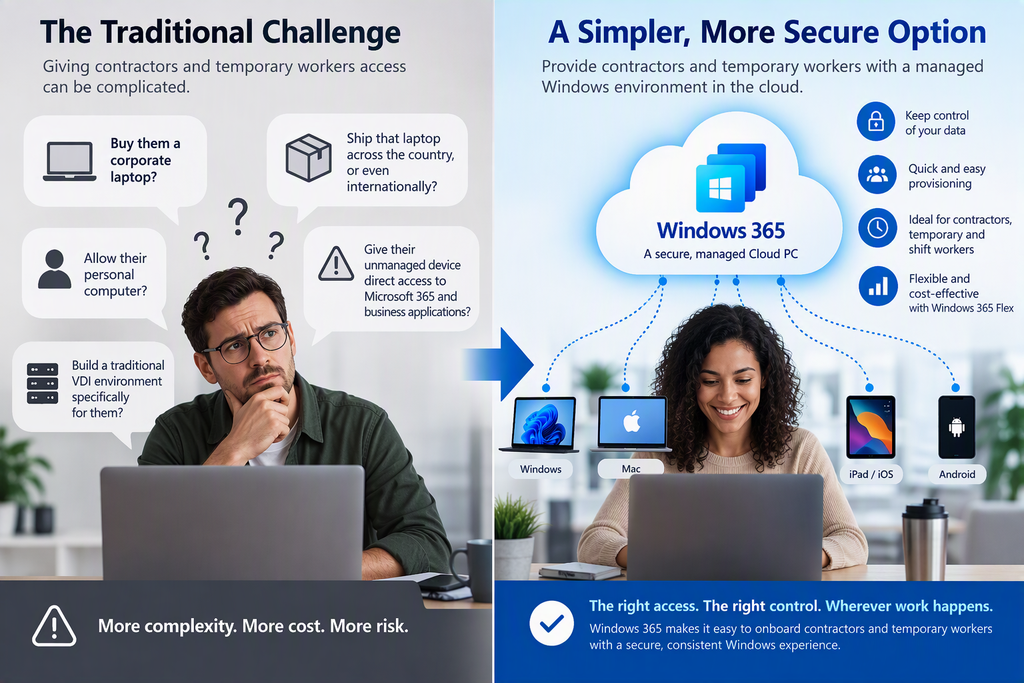
Giving an external consultant access to corporate resources can quickly become complicated.
Do you:
Buy them a corporate laptop?
Ship that laptop across the country, or even internationally?
Allow their personal computer?
Give their unmanaged device direct access to Microsoft 365 and business applications?
Build a traditional VDI environment specifically for them?
Windows 365 gives organizations another option.
Instead of putting the corporate workspace on the contractor’s physical computer, IT can provide a managed Cloud PC.
The contractor gets the Windows environment required to perform the job while the organization retains control over that Cloud PC.
For temporary, seasonal, shift-based and part-time workers, Microsoft also offers Windows 365 Flex, formerly Windows 365 Frontline. For temporary, seasonal, shift-based, and part-time workers, Microsoft also offers Windows 365 Flex, formerly Windows 365 Frontline. Windows 365 Flex includes Dedicated and Shared modes, allowing organizations to provide Cloud PCs to different types of workers while licensing around concurrent usage. [microsoft.com]
That can make Cloud PCs interesting beyond the traditional permanent employee.
Scenario 3: Bring Your Own Device Without Bringing Your Own Security Problems
BYOD has always created an uncomfortable discussion for IT.
Users like using their own computers.
Security teams usually like them considerably less.
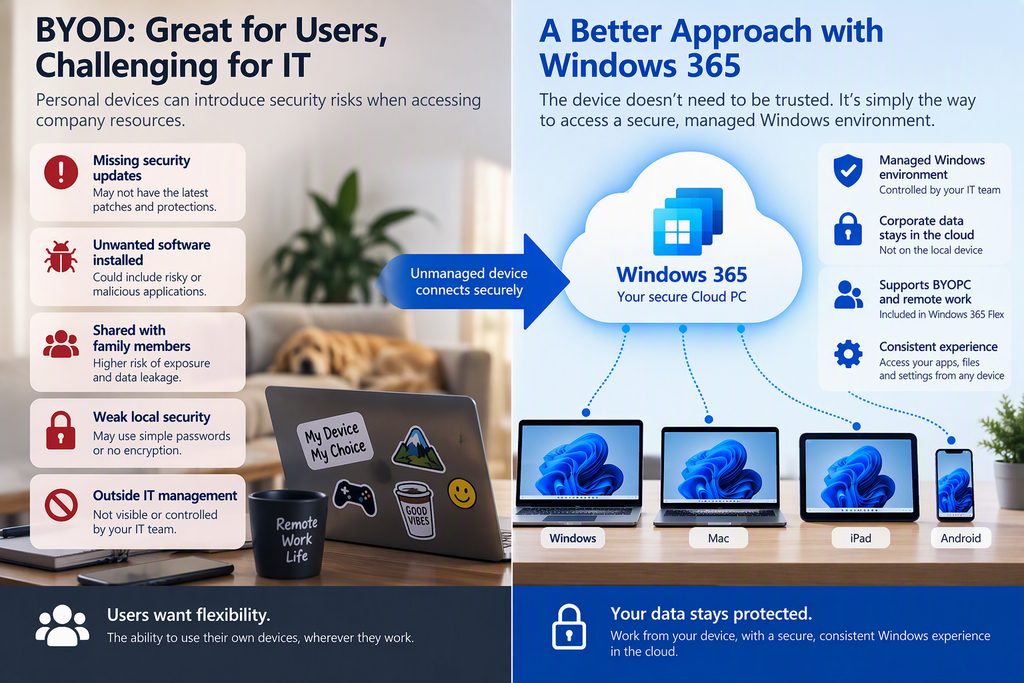
An unmanaged computer might:
Be missing security updates
Have unwanted software installed
Be shared with family members
Have weak local security
Be outside normal IT management
Windows 365 doesn’t magically make an untrusted endpoint trustworthy.
What it does provide is another architecture for dealing with the situation.
Rather than treating the unmanaged computer as the corporate computer, it can be used to connect to a managed Cloud PC.
Microsoft explicitly lists BYOD and remote-work scenarios among the use cases for Windows 365 Flex. [microsoft.com]
This distinction is important.
You don’t necessarily need to treat the computer as a trusted corporate endpoint simply because someone is using it to access work.
You still need to secure the connection and control what can happen between the local device and the Cloud PC, but you’re starting from a very different security model.
This Is Where Zero Trust Becomes Important
Moving Windows into the cloud doesn’t automatically make it secure.
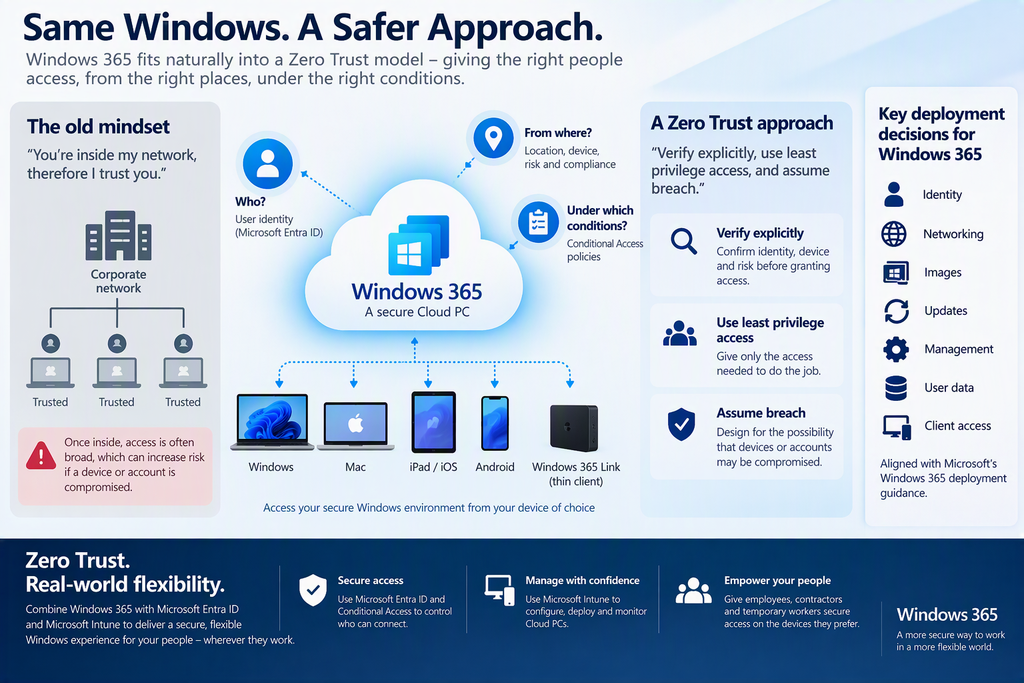
You still need to decide: Who can access this Cloud PC, from where, and under which conditions?
Fortunately, Windows 365 fits very naturally into Microsoft’s Zero Trust approach.
Microsoft’s latest Windows 365 deployment guidance recommends a cloud-native, Zero Trust-aligned model and organizes deployment decisions around areas including identity, networking, images, updates, management, user data and client access. [learn.microsoft.com]
Zero Trust essentially changes the mindset from:
You’re inside my network, therefore I trust you.
to principles including:
Verify explicitly, use least-privilege access, and assume breach.
Those are the principles Microsoft identifies in its Zero Trust guidance for Windows 365. [learn.microsoft.com]
And this is where Windows 365 becomes much more interesting when combined with Microsoft Entra ID and Microsoft Intune.
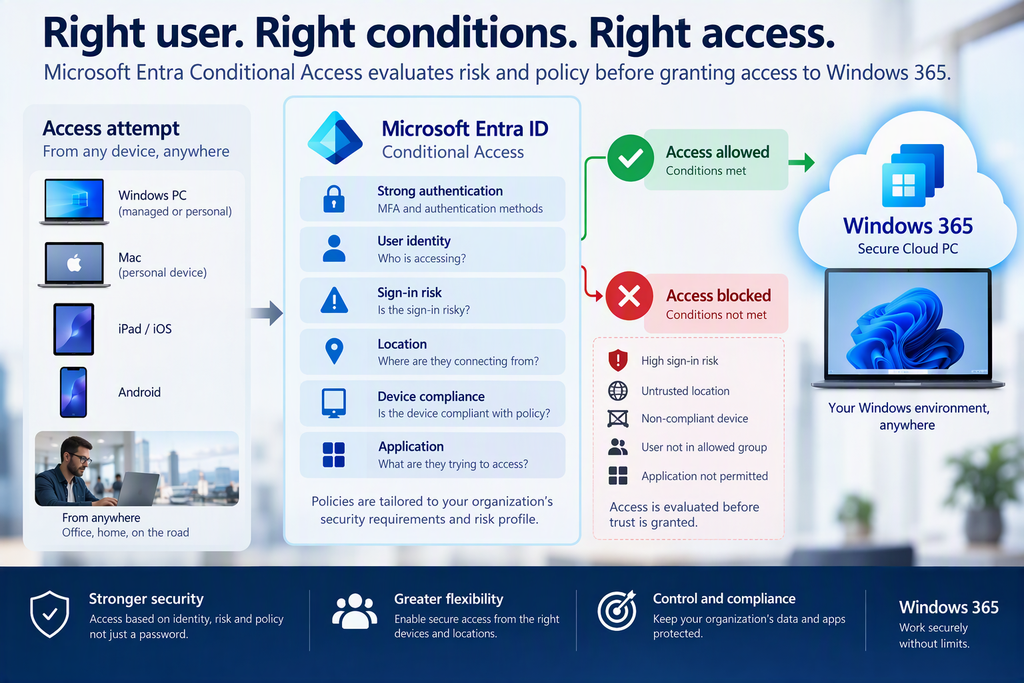
Conditional Access Becomes Your Front Door
If somebody attempts to access a Cloud PC, identity becomes extremely important.
Microsoft identifies Entra Conditional Access as a primary control for conditionally granting access to the Windows 365 service. [learn.microsoft.com]
That allows organizations to build access decisions around their security requirements rather than simply asking whether the user knows a password.
For example, your security design might consider controls around:
Strong authentication
User identity
Sign-in risk
Location
Device compliance
The application being accessed
The exact policies should always be designed around the organization’s environment and risk profile.
But the important architectural difference is that access is evaluated before simply trusting the connection.
The Cloud PC Is Still an Endpoint
There’s another misconception worth addressing.
A Cloud PC is not something that can simply be deployed and forgotten.
It is still a Windows endpoint.
It needs:
Configuration
Updates
Security policies
Application deployment
Monitoring
Compliance policies
For Windows 365 Enterprise, Cloud PCs can be managed through Microsoft Intune, allowing IT departments to apply many of the same endpoint-management skills and processes they already use for physical PCs. Windows 365 Enterprise Cloud PCs are managed through Microsoft Intune, allowing IT teams to use many of the same management tools and processes they already use for physical Windows devices. [microsoft.com]
For an organization already managing Windows 11 through Intune, this is particularly attractive.
You don’t need a completely separate management philosophy just because Windows is running somewhere else.
Security Starts Before Windows Even Loads
Microsoft also enables several security technologies by default on new Cloud PCs.
These include:
Virtual TPM
Secure Boot
Hypervisor-protected Code Integrity
Microsoft Defender Credential Guard
Microsoft notes that HVCI and Credential Guard are enabled by default for Cloud PCs using a Windows 11 gallery image. [learn.microsoft.com]
These controls help provide a strong security foundation for the Windows environment itself.
But, again, I wouldn’t look at any single feature as the reason Windows 365 is secure.
The real strength comes from combining layers.
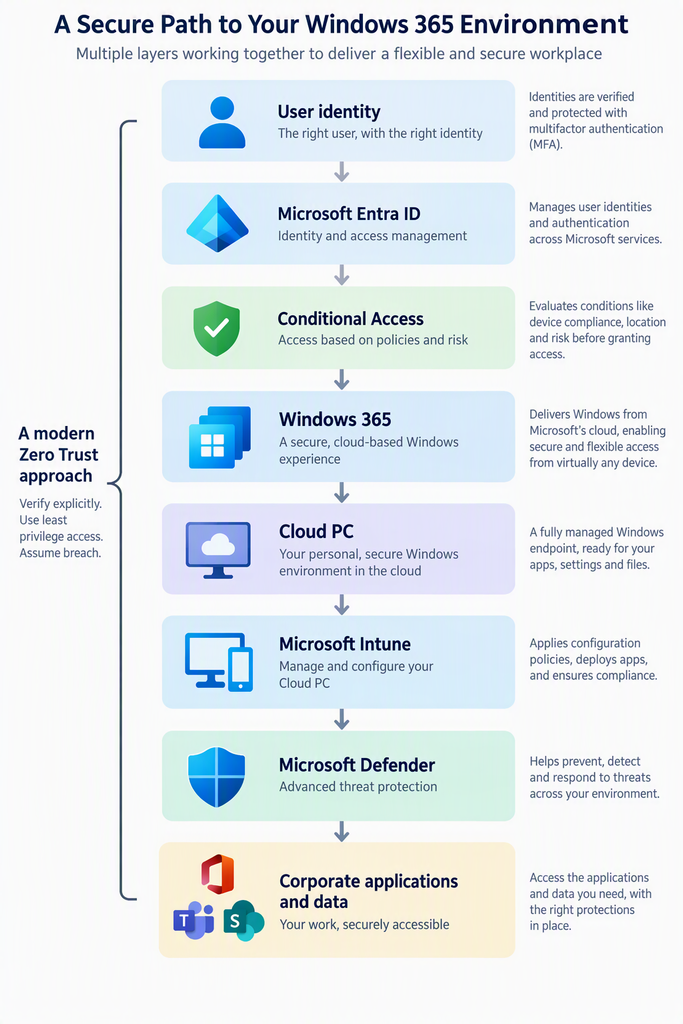
Think in Layers
A well-designed Windows 365 environment could look something like this:
This is much closer to how modern endpoint security should be approached.
There isn’t one magic security setting.
Identity, endpoint configuration, access control and data protection work together.
Microsoft itself separates Windows 365 security into securing Cloud PC access, the Cloud PC device, and Cloud PC data. [learn.microsoft.com]
Flexibility Isn’t Only About Working Remotely
When people hear “Cloud PC”, they often immediately think:
remote workers.
But there are many more scenarios.
For example:
Contractors
Provide a corporate Windows environment without necessarily providing them with the same physical hardware model as permanent employees.
Temporary employees
Provision a Windows environment for the duration of their assignment.
Developers and administrators
Provide an isolated Windows workspace appropriate to a specific role or access model.
Consultants
Access the same Windows environment while moving between customer locations.
BYOD
Allow supported personal devices to act as an access point to a centrally managed Windows environment.
Shift and frontline workers
Windows 365 Flex can support workers who need Cloud PC access during particular working sessions without necessarily requiring a traditional one-user, one-PC model. [microsoft.com]
Suddenly Windows 365 becomes less about “putting desktops in Azure” and much more about changing where the boundary between the user and the IT-managed Windows environment sits.
It Can Also Change Device Lifecycle Thinking
There’s another advantage that doesn’t always receive enough attention.
Separating Windows from the physical endpoint changes how you can think about hardware.
When someone’s workstation is their physical laptop, replacing that laptop means replacing their working environment too.
When their working environment is a Cloud PC, the access device and the Windows environment have separate lifecycles.
That could be valuable when:
A laptop fails
A user temporarily needs another device
Someone works from multiple locations
A contractor uses their own hardware
Hardware procurement takes longer than expected
It doesn’t mean physical endpoint management disappears.
It means the endpoint doesn’t necessarily contain the entire workplace anymore.
Windows 365 Is Not a Security Shortcut
This might be the most important part.
Don’t deploy Windows 365 and assume:
“It’s in Microsoft’s cloud, so security is taken care of.”
That’s not Zero Trust.
Identity still needs to be protected.
Conditional Access still needs to be configured correctly.
Cloud PCs still need to be managed.
Applications still need updating.
Users still need appropriate permissions.
Data still needs protection.
Incidents still need to be monitored.
Microsoft’s current Windows 365 deployment guidance explicitly recommends considering identity, networking, images, updates, management, user data, clients and supportability as part of the architecture. [learn.microsoft.com]
The platform provides the building blocks.
It’s still our job as IT professionals to use them properly.
Flexibility and Security Don’t Have to Be Opposites
For me, that’s the most interesting thing about Windows 365.
We’re used to making a compromise.
More flexibility usually means less control.
More security usually means restricting what users can do.
Windows 365 gives IT departments another way to approach that problem.
The device in someone’s hands no longer necessarily needs to be their corporate Windows environment.
Instead, Windows can follow the user through their Cloud PC while IT maintains centralized control over that environment.
Combine that with Microsoft Entra ID, Conditional Access, Intune, and Microsoft’s Zero Trust approach, and you get something much more interesting than simply hosting a Windows virtual machine in the cloud.
You get a different way of thinking about the corporate PC.
The future of endpoint management might not be about managing every computer a user touches.
It might be about securely delivering the right Windows environment wherever that user happens to be.
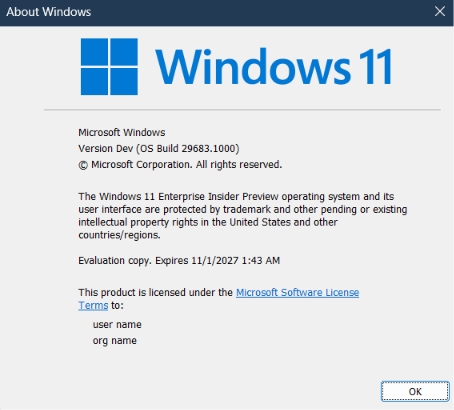
Hi all, last Wednesday Microsoft released Windows 11 Build 29683.1000 to the Experimental (Future Platforms) Channel.
screenshot of Winver showing the new build
Quick and smooth upgrade, pin access still worked after this upgrade, however my fingerprint wasn’t recognized anymore on my Surface Laptop 13inch, after reregistering the fingerprint all is fine.
Enjoy flighting!
Changes and improvements gradually being rolled out*
This update includes a small set of general improvements and fixes that improve the overall experience for Insiders running this build on their PCs.
[General]
Symbols were missing for our previous flight. They should be available for this one.
Known issues
We’re investigating reports that some Insiders aren’t able to use the internet after the previous flight.
We’re also aware of and investigating reports of VMware devices green screening.
Microsoft MVP in Windows and Devices, Technical Supervisor of Field System Engineers,
and passionate about Microsoft technologies.
I share practical knowledge on Intune, Microsoft Defender, Entra ID,
PowerShell, Windows management, security, and modern workplace solutions.
If my content, scripts, presentations, or community contributions have saved
you time or helped solve a problem, consider supporting my work and this blog.